
1. 서론
The ASUS M4A79XTD EVO is an ATX motherboard designed for AMD Socket AM3 processors, featuring the AMD 790X/SB750 chipset. This manual provides essential information for the proper installation, operation, and maintenance of your motherboard, ensuring optimal performance and longevity.
2. 주요 특징
- ASUS 8+2 Phase Power Design for AM3: Optimized for performance and power efficiency, ensuring stable overclocking capabilities.
- ASUS TurboV & Turbo Key: Utilities for real-time system tuning and overclocking directly from the operating system environment, alongside a one-button performance enhancement feature.
- ASUS Anti-surge Protection: Provides defense against over-voltage damage to motherboard components.
- ASUS Q-Slots: Designed for quick and easy installation and removal of expansion cards.
- Extreme Silent Thermal Solution: Engineered for effective and quiet heat dissipation across critical components.
3. 설정 및 설치
Before beginning installation, ensure you have a clean, static-free workspace. It is recommended to wear an anti-static wrist strap to prevent damage to components. Gather necessary tools, including a Phillips head screwdriver.
3.1 마더보드 레이아웃
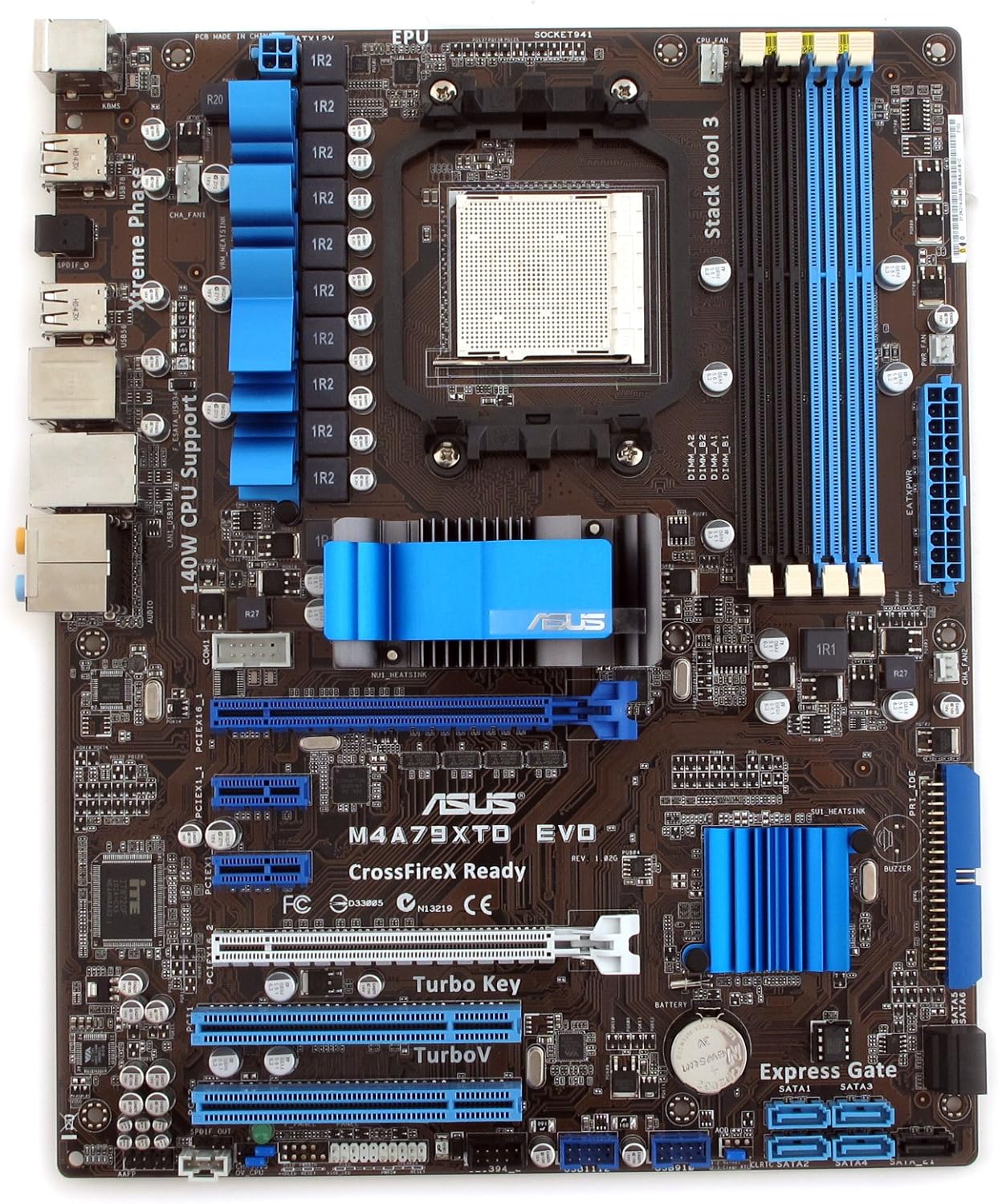
그림 1: 상향식 view of the ASUS M4A79XTD EVO motherboard, illustrating the placement of the CPU socket, DDR3 DIMM slots, PCIe and PCI expansion slots, SATA ports, and various onboard headers.

그림 2: 각도 view of the ASUS M4A79XTD EVO motherboard, focusing on the rear I/O panel which includes PS/2 ports, USB ports, LAN, and audio jacks.
3.2 설치 단계
- CPU 설치: Carefully align your AMD Socket AM3 processor with the socket on the motherboard. Ensure the triangular marks on the CPU and socket match. Gently lower the CPU into the socket and secure it with the retention lever.
- CPU 쿨러 설치: 써멀 페이스트가 도포되어 있지 않은 경우 도포하고, 제조사의 지침에 따라 CPU 쿨러를 설치하십시오.
- 메모리(RAM) 설치: Insert DDR3 memory modules into the DIMM slots. Ensure the notches on the modules align with the keys in the slots. Press down firmly on both ends until the retention clips snap into place. Refer to the motherboard layout for recommended dual-channel configurations.
- 메인보드 장착: Install the I/O shield into your computer case. Carefully place the motherboard into the case, aligning the screw holes with the standoffs. Secure the motherboard with screws.
- 전원 연결 : Connect the 24-pin ATX main power connector and the 8-pin (or 4-pin) ATX 12V power connector from your power supply to the motherboard.
- 저장 장치 연결: Connect SATA data cables from your storage drives (HDDs, SSDs) to the SATA ports on the motherboard. Connect power cables from the power supply to your drives.
- 확장 카드 설치: Install graphics cards and other PCI/PCIe expansion cards into the appropriate slots. Secure them with the case's retention mechanisms.
- 전면 패널 연결: Connect the front panel headers (power button, reset button, USB ports, audio jacks, LED indicators) to the corresponding pins on the motherboard. Refer to the motherboard manual for specific pin assignments.
- 주변기기 연결: Connect your keyboard, mouse, monitor, and other peripherals to the rear I/O ports.
4. 사용 설명서
- 초기 부팅 및 BIOS 설정: Upon first power-on, access the BIOS setup utility (typically by pressing the 델 or F2 key during startup) to configure basic settings, boot order, and system time.
- 드라이버 설치: After installing your operating system, install all necessary drivers from the ASUS support website or the included driver CD to ensure full functionality of all motherboard components.
- ASUS TurboV: This utility allows for real-time system tuning and overclocking directly from the operating system environment, providing granular control over performance parameters.
- ASUS Turbo Key: A hardware button or software function that provides an instant performance boost with a single press, optimizing system settings for enhanced speed.
5. 유지관리
- 먼지 제거: Regularly clean dust from the motherboard, CPU cooler, and case fans using compressed air to prevent overheating and maintain optimal performance.
- BIOS 업데이트: ASUS 공식 지원 페이지를 주기적으로 확인하세요. website for BIOS updates. Updating the BIOS can improve system stability, compatibility with new hardware, and overall performance. Always follow the update instructions carefully.
- 케이블 관리 : Ensure internal cables are neatly routed to improve airflow within the case and prevent interference with components.
6. 문제 해결
- 전원 없음: Verify all power connections (24-pin ATX, 8-pin ATX 12V) are securely seated. Check the power supply unit for proper operation.
- No Display (POST issues): Ensure the graphics card is properly seated in its PCIe slot and connected to power (if required). Check monitor connections and try reseating RAM modules.
- 시스템 불안정/충돌: This can be caused by various factors including incompatible drivers, faulty memory, or overheating. Ensure all drivers are up to date. Check CPU and GPU temperatures using monitoring software.
- ASUS Anti-surge Protection Activation: If your system experiences unexpected shutdowns or power issues, the Anti-surge Protection may have activated to prevent damage. Check your power supply and electrical connections for stability.
- Consult ASUS Support: For persistent issues, refer to the comprehensive troubleshooting guide on the ASUS support website or contact ASUS technical support for further assistance.
7. 사양
| 특징 | 세부 사항 |
|---|---|
| 제품 치수 | 2.36 x 13.8 x 14.4 인치 |
| 품목 무게 | 2.8파운드 |
| 품목 모델 번호 | M4A79XTD EVO |
| 제조업체 | ASUS 컴퓨터 국제 직영점 |
| 상표 | 아수스 |
| CPU 소켓 | 소켓 AM3 |
| 호환 장치 | 개인용 컴퓨터 |
| RAM 메모리 기술 | DDR3 |
| 호환 프로세서 | AMD A Series |
| 칩셋 유형 | AMD 790X |
| 플랫폼 | 윈도우 10 |
| 메모리 저장 용량 | 16GB (XNUMX기가바이트) |
| 주 전원 커넥터 유형 | 24핀 |
| 첫 번째 이용 가능 날짜 | 18년 2009월 XNUMX일 |
8. 보증 및 지원
법적 고지사항: This product is sold AS IS.
For detailed warranty information, technical support, and access to the latest drivers and utilities, please visit the official ASUS support website. Support resources typically include driver downloads, frequently asked questions (FAQs), and contact information for technical assistance.
더 많은 정보와 지원은 다음에서 찾을 수 있습니다. Amazon의 ASUS 스토어.